Drawing
There are so many books that one can read that teaches you how to draw, but I have come upon some interesting ways to get the eye of the artist right.
Drawing is an art that conveys to the viewer a clear idea about the scene and the subject. (A scene is the situation in the drawing and the subject is the main part or action of the drawing). Drawing requires the flexibility of the fingers, joints and also of the palm.
Drawing is seeing an object or scene and then replicating this as accurately as possible. The eye works as a camera, capturing what it see. The task of the brain is to find a way to replicate what it see on the drawing board. We see our world and objects in three-dimensional, but the eye capture it in two-dimensional. If you want to draw the view, you just have to draw what you see, while ignoring what the brain tells and knows about the three-dimensional world, because that knowledge will not work in the two-dimensional drawing.
First one has to learn to see. This requires some practice, because the brain interprets a lot of things at once and wants to implement it too and this makes it harder to see what there actually is.
For instance, when you see a face. In your mind, you have some simple idea of the basic, like the shape of the eyes, the nose, the mouth and shape of the face, but when you try drawing an eye, you probably draw it as a line drawing, as an oval with a circle inside, and not as a photo-realistic drawing. You possibly would draw it as a face looking directly at you. It is a fact that every eye is different and you should be able to draw what you see without your brain telling you what things should look like. You should see and draw what things, look like.
There are some exercises that you can try to make your brain ignore and try to make sense out of or what things should look like. It is possible if you draw something that your brain does not know so that it can not analize it.
-
To make you see the little details, rather than to make sense out of the bigger picture, of all the lines, train your eye and mind by drawing the wrinkles on some part of your hand. Do not look at the drawing, but just slowly follow the lines in your hand and draw the same lines. It does not need to be accurate.
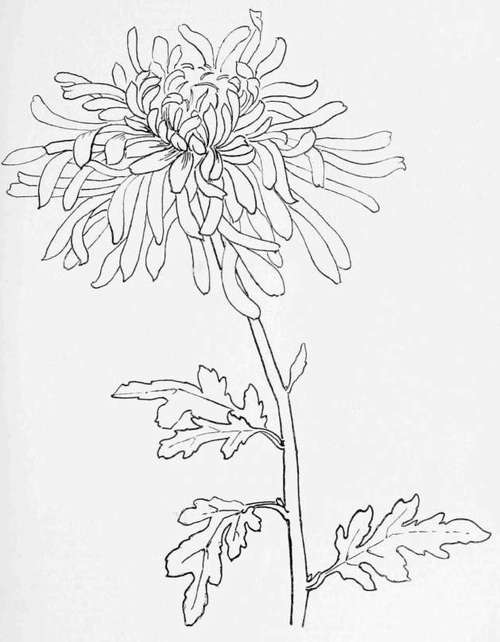
- Take this line drawing or one of some subject that does not have too much detail. Turn it upside down and draw it. Place a piece of paper over parts of the original drawing so that you do not see the whole picture at any time. While you draw, compare the angles of the lines and the different shapes the lines make. When you are finished, turn both drawing upside down and see what you've draw. You might be surprised about how well you draw.